
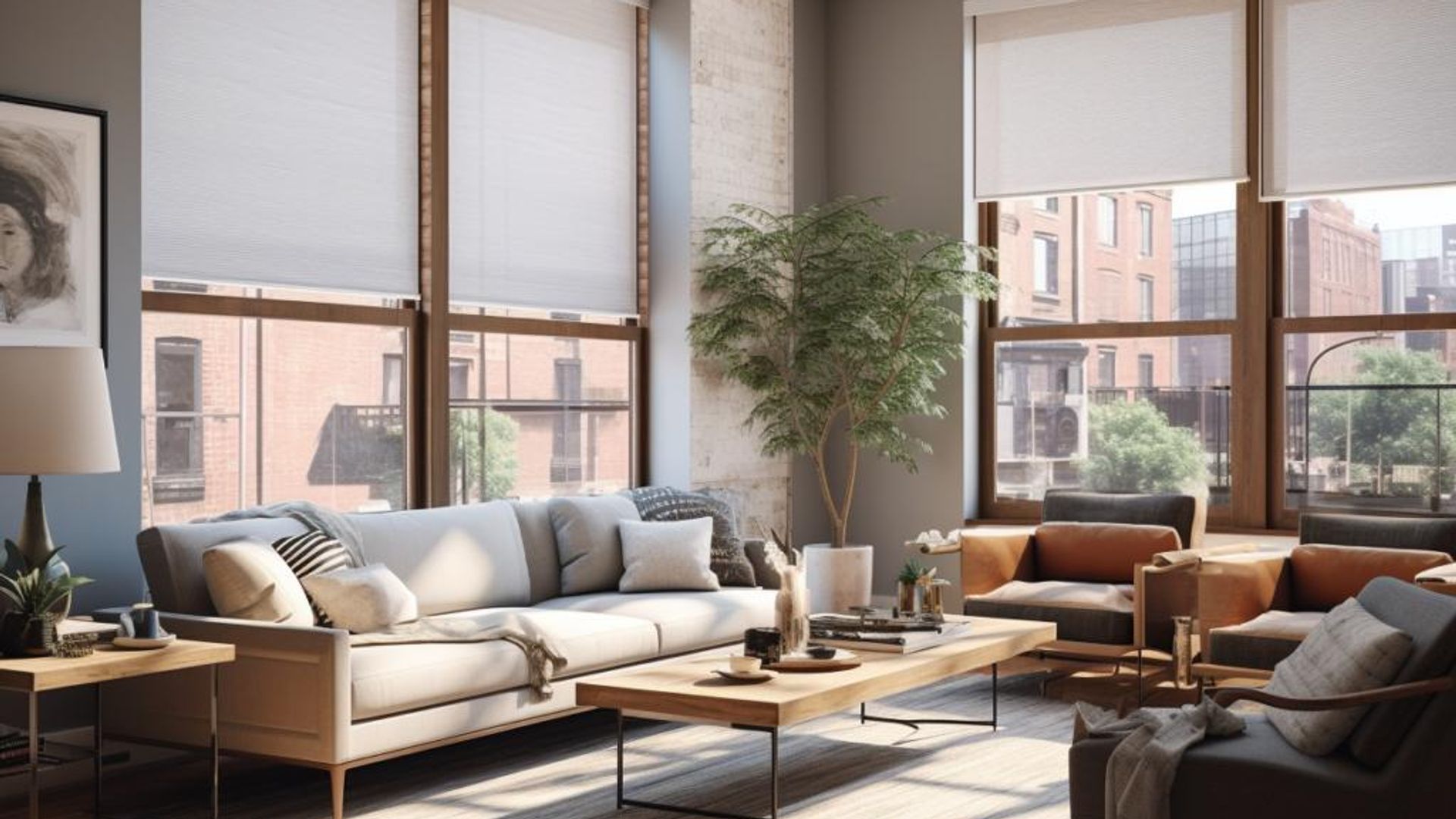
When you picture a roller shade on your window, where do you see it sitting? An inside mount puts the brackets within the window opening and leaves the surrounding trim visible. An outside mount positions the shade on a suitable surface beyond the opening so the fabric can overlap it. The choice changes how the shade looks, how it clears window hardware and how much light can enter at the edges.
If you’re comparing custom roller shades for a Calgary home, start with how you use each window. A shade that sits neatly in the living room may need a different mounting position in a bedroom, even if both use the same fabric.
Check the space behind the trim
With an inside mount, the depth available where the brackets go matters more than the depth of the sill. Look at the top of the opening. A shallow recess can leave part of the roller or cassette projecting into the room. Ask your installer to distinguish the minimum depth needed to secure the brackets from the depth needed for the chosen hardware to sit flush. Those dimensions can differ by shade and bracket.
Next, open the window and move its handle or crank through its full range. Picture where the fabric and bottom bar will pass. A handle that clears the fabric when closed may still interfere when you use it. Uneven openings or trim can also change how much clearance you have from one side to the other. Flag these details at the measure so the installer can assess the shade and window together.
Decide how much edge light you can live with
An inside-mounted roller shade typically leaves some space between the fabric and the sides of the opening. The hardware needs room, and the fabric is often narrower than the complete assembly. In a living room that gap may be acceptable. In a bedroom, a strip of early light can be noticeable from the bed even with a blackout fabric.
An outside mount can reduce visible edge light by allowing the fabric to overlap the opening. Ask where the fabric edges will sit, since the bracket-to-bracket width can be different. The mounting surface, nearby walls and space above the window determine how much overlap is practical. Look at the proposed coverage from the spot where you notice glare or light most. Fabric opacity and edge coverage are two separate decisions.
Look at the whole wall
An inside mount keeps decorative casing in view and can leave more room for curtain panels. An outside mount changes the outline of the window when the shade is down. It can suit a shallow opening or help align the tops of shades on a wall where the windows sit at slightly different heights. Have the installer show where the bracket and roller would sit so you can see what will remain visible when the shade is raised.
Check what surrounds the window before settling on outside coverage. A cabinet close to one side, an adjacent door or a curtain rod can limit where the shade sits or how it moves. Ask the installer to confirm where the brackets can be secured and whether the proposed hardware will clear those features.
Compare two windows before ordering for the whole room
Consider a living room with two similar-looking windows. One has a deep fixed frame and decorative trim. An inside mount may preserve that trim and keep the roller tucked into the opening. The other has a crank that sticks into the shade’s path. An outside mount may solve the clearance problem, but the extra overlap will change how the pair looks from across the room. If matching is important, compare the look and movement of both shades in each mounting position before choosing.
Take a photo of each window straight on and another from the side showing the top recess and hardware. Note which windows open regularly, where light bothers you and whether curtains will stay. These notes make it easier to compare options during the visit. Leave the final order measurements to the installer for the selected product.
Get a recommendation for your windows
Contact Speedy Blinds Calgary to request an in-home consultation. Point out any shallow frames, window cranks or rooms where edge light matters, and ask to see where the roller, fabric and bottom bar would sit for each option.